
Expert-Vetted Yacht Charter in Greece | SEA4SOUL Boutique Brokerage
A huge selection of Catamarans & Monohulls – with professional guidance from booking to boarding.
Navigating Greece: Local Fleet & Sailing Intelligence
Chartered sailing in Greece requires matching the right vessel to your specific region and season:
-
Saronic Gulf & Cyclades (Athens / Lavrion): Stronger summer Meltemi winds dictate robust monohulls or high-stability catamarans for comfortable offshore passages.
-
Ionian Sea (Lefkada / Corfu): Protected waters and mild thermal breezes, ideal for family bareboat charters and relaxed island hopping.
As an independent broker, we filter local Greek charter operator fleets to secure fully-vetted yachts, transparent terms, and direct pricing without sailing club membership fees.
Top Sailing Destinations in Greece: A Skipper’s Guide
Greece enjoys a long sailing season (April to October), but sea conditions vary dramatically from one region to another. As skippers, it is crucial to understand these patterns to match the destination to your experience level and your crew’s preferences.
The Saronic Islands: Historic Routes & Calm Waters
Stretching between the Peloponnese Peninsula and Attica, the Saronic Gulf connects to the Gulf of Corinth through the famous Corinth Canal. It’s home to the charming Saronic Islands — Aegina, Salamis, Hydra, and Poros — a favorite sailing destination known for its pleasant climate, calm seas, and stunning scenery.
Easily accessible from Athens, the Saronic Gulf is ideal for both beginner and experienced skippers, offering short sailing distances and plenty of beautiful anchorages.
Arrival: To sail in the Saronic Gulf, fly into Athens.
Main Departure Bases
-
Alimos Marina, Athens
-
Zea Marina, Piraeus
-
Salamina Marina, Salamis
-
Olympic Marina, Lavrion

Typical weather for the Saronic Gulf
-
Character: The most popular sailing ground starting from Athens. The Attica and Peloponnese peninsulas protect the gulf from high waves.
-
Prevailing Wind: Affected by the Meltemi (North/North-East), but in a much milder form.
-
Daily Pattern: Usually winds of Force 3-5. You might experience stronger gusts near the islands of Hydra and Poros, but the sea state remains relatively comfortable.
-
Difficulty Level: Easy-Medium.

For recommended Itineraries in the Saronic Gulf
The Ionian Islands: The Emerald Sea (Perfect for Families)
Located in the Ionian Sea, west of mainland Greece, this island group includes the famous islands of Corfu, Zakynthos, Kefalonia, Lefkada, and Ithaca. The Ionian Islands are renowned for their lush green landscapes, dramatic mountains, crystal-clear waters, distinctive architecture, traditional villages, and their peaceful, authentic atmosphere.
They offer a perfect blend of relaxation and adventure — from iconic beaches and watersports in Lefkada to nature trails and scenic hikes in Ithaca.
Arrival: Preveza airport
Main Departure Bases
-
Preveza Marina, Preveza
-
D-Marin Marina, Lefkada
-
Gouvia Marina, Corfu
-
Preveza marina or town dock

Typical weather for the Saronic Gulf
-
Character: The ideal region for families and skippers at the beginning of their journey. The sea is mostly flat and comfortable.
-
Prevailing Wind: The "Maistro" – a Northwestern thermal wind.
-
Daily Pattern: Mornings are typically calm (flat sea). The wind picks up around 13:00-14:00 to a gentle Force 3-4 (Beaufort) and dies down at sunset. This allows for relaxed afternoon sailing and quiet nights at anchor.
-
Difficulty Level: Easy.

For recommended Itineraries in the Ionian Sea
The Cyclades: The Iconic Blue & White (For Experienced Sailors)
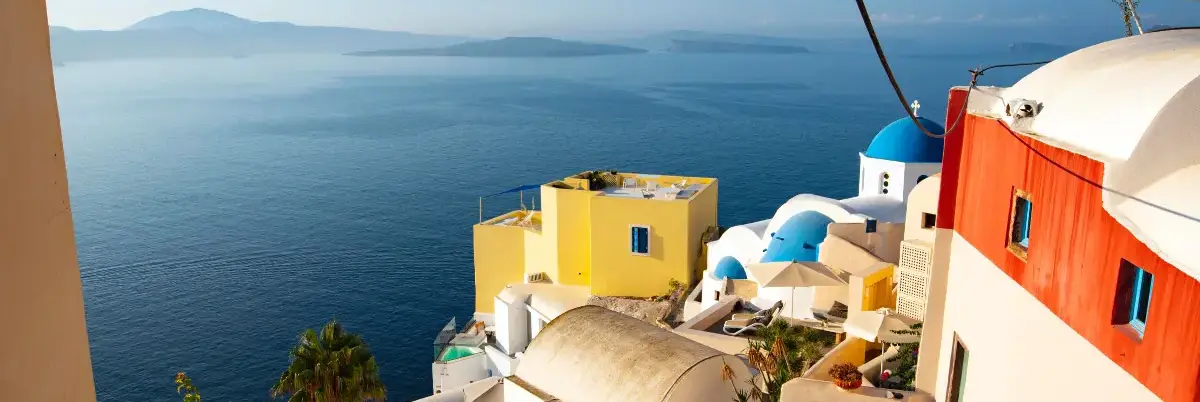
The Cyclades are a stunning group of Greek islands in the Aegean Sea, southeast of mainland Greece. Their name comes from the Greek word “kyklos” (circle), as they form a ring around the sacred island of Delos.
This island group includes 220 islands and islets, with the most famous being Santorini, Milos, Paros, Naxos, Ios, and Mykonos. Many of the smaller ones are uninhabited. The capital of the Cyclades is Ermoupoli, located on the island of Syros.
Unlike the Ionian Sea or the Saronic Gulf, sailing in the Cyclades means open-sea passages — the classic “blue water” experience — where conditions are more exposed to weather and to the strong Meltemi winds that often blow between July and September.

Main Departure Bases
-
Bay of Kythnos – Cyclades
-
Olympic Marina, Lavrion
-
Ornos Bay, Mykonos
-
Tourlos Marina, Mykonos
Typical weather for the Cyclades Islands
-
Character: Open blue seas, iconic white houses, and strong winds. Suitable for experienced sailors looking for "Sporty Sailing" and action.
-
Prevailing Wind: The Meltemi – a strong, dry Northern wind.
-
Daily Pattern: During July and August, the Meltemi can blow at Force 6-8 for days on end, even during the night. The waves in the Aegean are short and steep (Choppy), which can be challenging for an unskilled crew. June and September offer milder conditions.
-
Difficulty Level: Hard (July-August), Medium (Shoulder Season).

Plan a Sailing Route in the Cyclades [Press Here]

The Dodecanese: A Journey Through History & Castles
The Dodecanese comprise 15 larger islands and about 151 smaller ones, scattered across the Carpathian Sea in the southeastern Aegean, close to the southwestern coast of Turkey. The best-known islands include Rhodes, Kos, Leros, Kastellorizo, Symi, and Nisyros.
These islands are part of Greece but have a rich and diverse history, having been ruled at different times by the Ottomans, Italians, and even Nazi Germany during World War II. Even the smallest of these islands boast beautiful Byzantine churches and medieval castles perched above picturesque harbors.
Main Departure Bases
-
Kos Marina, Kos
-
Rhodes Marina, Rhodes

Typical weather for the Cyclades Islands
-
Character: South-East Greece, near the Turkish coast. A very hot region with an exceptionally long sailing season.
-
Prevailing Wind: Meltemi (blowing from the North-West in this area).
-
Daily Pattern: The wind here is more stable than in the Cyclades, yet still fresh. It usually strengthens from the late morning hours. The main advantage is the abundance of islands and bays providing excellent leeward protection from wind and waves.
-
Difficulty Level: Medium.
The Sporades: Pine Forests & Turquoise Waters ('Mamma Mia' Style)
The Sporades are a picturesque island group in the northern Aegean Sea, east of mainland Greece. The main inhabited islands are Skiathos, Skopelos, Alonissos, and Skyros, surrounded by many smaller islets.
These islands are celebrated for their lush green landscapes, crystal-clear waters, and beautiful beaches, making them a fantastic sailing destination. Alonissos is famous for its National Marine Park, home to the endangered Mediterranean monk seal, while Skopelos is widely known as one of the filming locations for the movie “Mamma Mia!”.
The region is perfect for sailing, offering well-sheltered bays and short distances between islands, ideal for relaxed cruising and scenic exploration.
Main Departure Bases

-
Skiathos Marina, Skiathos
-
Volos Port, Volos (Pelion)
Typical weather for the Sporades Islands
-
Character: North-West Aegean. Very green and forested landscapes.
-
Prevailing Wind: Meltemi (North-East).
-
Daily Pattern: The Meltemi here is generally weaker than in the Cyclades. However, since the sea is open to the North, swell can occur even when the wind drops. Many bays on the southern side of the islands offer safe anchorage.
-
Difficulty Level: Medium.

Skipper License
Greece officially recognizes most European and international sailing licenses, including:
-
ICC (International Certificate of Competence) – recognized throughout Europe.
-
RYA Day Skipper / Coastal Skipper (UK).
-
ASA 104 or higher (USA).
-
IYT Bareboat Skipper / Yachtmaster (international).
-
Israeli Skipper License – Mishit 30 or higher, issued by the Ministry of Transport (commonly accepted).
-
For smooth check-in, it’s recommended to carry the original license, and if it’s not in English, bring a certified translation (English or Greek).
Read more on sailing in Greece


